Imagine walking into a store and asking a salesperson about a product. They stumble, give vague answers and clearly do not know what they are selling. Would you buy from them?
Probably not.
This is why product knowledge is one of the most critical skills in sales. It is the foundation that supports every successful sales conversation.
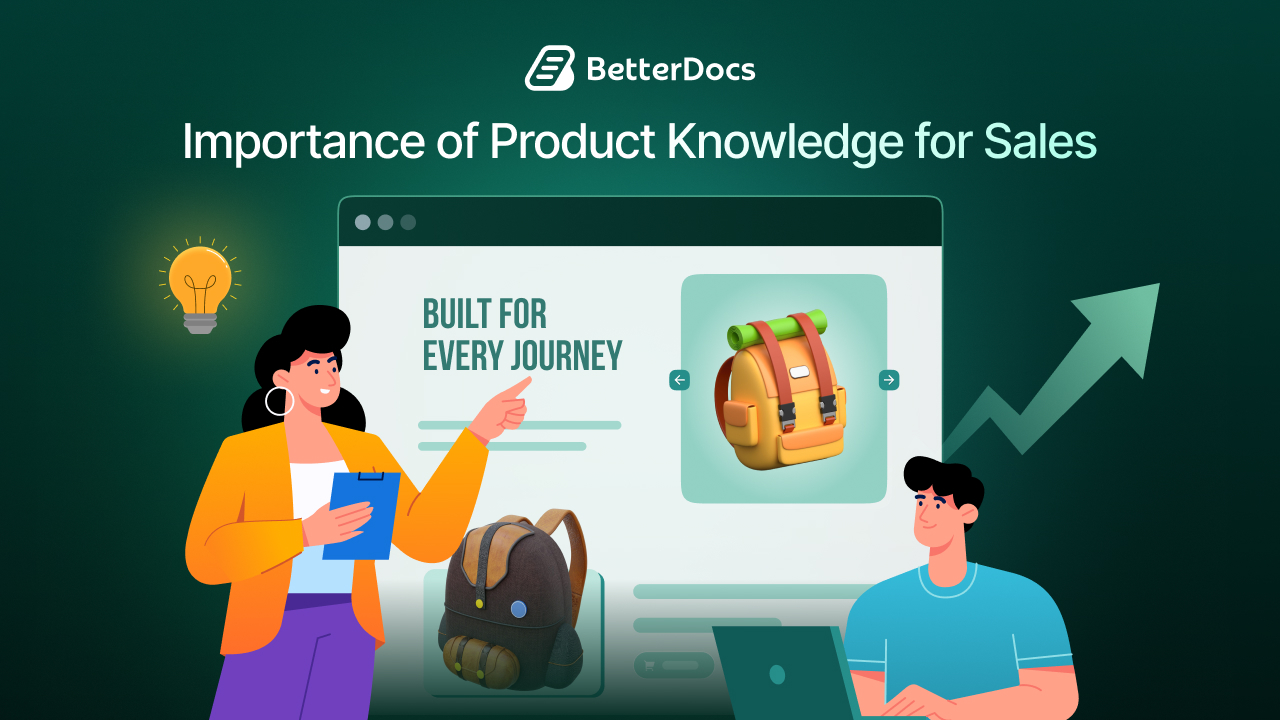
When a sales rep truly understands what they are selling, they can communicate value clearly, handle objections with confidence and earn the trust of potential buyers. In this blog, we will explore what product knowledge means and its different types, the importance of product knowledge in customer service, and how your sales team can use it to increase sales.
TL;DR — Quick Summary
| Topic | Summary |
| What is Product Knowledge? | A deep understanding of a product’s features, benefits, uses and limitations helps sales reps sell more effectively. |
| Why does it matter? | It builds buyer trust, shortens sales cycles, improves objection handling, and directly boosts revenue. |
| Main Types | Technical, competitor, customer, use-case, and industry knowledge. |
| How to build it? | Product training, hands-on usage, shadowing, customer feedback and continuous learning. |
| Key Benefit | Reps with strong product knowledge close deals faster and retain more customers long-term. |
What Is Product Knowledge?
Product knowledge refers to a comprehensive understanding of the product or service a salesperson is selling. It goes beyond just knowing the name or price. It includes knowing how the product works, what problems it solves, who it is best suited for and how it compares to competitors.
Strong product knowledge empowers sales reps to have meaningful conversations with prospects. It lets them tailor their pitch to each customer’s specific needs. And it signals credibility; something buyers value greatly before making a purchase decision. Think of product knowledge as the backbone of your entire sales strategy. Without it, even the best communication skills will not take you far.
Product knowledge also evolves constantly. Products get updated, new features roll out, pricing models change and competitors shift their positioning. Treating product knowledge as a one-time training event is a mistake. It needs to be a continuous, living practice within any sales organization.
Why Is Product Knowledge Important in Sales?
Sales is not just about persuasion. It is about solving problems. How you solve problems is part of your customer service that has an impact on your sales. When a salesperson deeply understands their product, they can position it as the right solution to the right buyer at the right time. So, why is product knowledge important in sales? Let us find out here in this section,
1. It Builds Trust with Buyers
Buyers can instantly tell when a rep does not know their product. That uncertainty breaks trust. On the other hand, a rep who speaks confidently about features, use cases and outcomes sounds credible. Credibility leads to trust and trust leads to sales.
Trust is the currency of sales. Buyers do not purchase from people they do not trust. And nothing destroys trust faster than a rep who clearly does not know what they are selling.
When a rep answers questions accurately, explains nuances confidently and proactively addresses concerns before they are raised, they come across as a knowledgeable advisor rather than just a vendor. That perception shift is enormous. It moves the conversation from transactional to consultative.
Consultative selling refers to a sales approach where representatives prioritize understanding the customer’s specific challenges and needs, then offer a customized solution instead of simply promoting a product. It consistently outperforms transactional selling.
Buyers today are also much more likely to do their research before engaging with a rep. If a buyer comes in knowing more about your product than your own salesperson does, the credibility gap is devastating. Product knowledge ensures your reps are always the most informed person in the room.

2. Improves Objection Handling
Objections are not problems; they are opportunities. When a buyer raises a concern, they are essentially telling you what they need to hear to say yes. A rep with deep product knowledge can recognize the real concern behind an objection and address it precisely.
For example, if a prospect says, “I’m worried this will not integrate with our current CRM,” a knowledgeable customer service rep can walk them through exactly how the integration works, which CRMs are supported, and what the setup process looks like. That specific, confident response turns a potential deal-breaker into a non-issue.
Without product knowledge, reps fall back on vague reassurances like “I’m sure it will be fine” or “Let me check with the technical team.” These responses stall deals and signal uncertainty to the buyer.
3. Shortens the Sales Cycle
When reps know their product well, they spend less time searching for answers or escalating questions. They answer queries on the spot. This speeds up decision-making for the buyer and closes deals faster.
Every time a rep has to “get back to someone” with an answer, the deal loses momentum. Follow-up emails get delayed, prospects get distracted and deals that could have closed in a week drag on for a month.
Strong product knowledge eliminates these delays. Reps can answer questions on the spot, move conversations forward and maintain the momentum that drives deals to close. Over time, this adds up to a significantly shorter average sales cycle, which means more deals closed per quarter with the same number of reps.
4. Enables Personalized Selling
Every customer has a different pain point. Product knowledge lets a sales rep identify which feature or benefit is most relevant for each specific prospect. This kind of targeted, personalized selling is far more effective than a generic pitch.
One of the most common complaints buyers have about salespeople is that the pitch feels generic, like the rep is reading from a script that has nothing to do with their specific situation. Product knowledge fixes this.
When a rep understands their product deeply, they can quickly identify which aspects are most relevant to the specific buyer in front of them. They can lead with the features that matter most to that person’s role, industry, or pain point. They can skip over what is irrelevant and focus on what creates value. This kind of tailored, personalized selling feels entirely different to buyers and converts at a much higher rate.
5. Boosts Sales Confidence
Confidence is contagious. When a rep knows their product inside out, they feel more comfortable during calls and meetings. That confidence makes the buyer more comfortable, too. It reduces anxiety on both sides of the conversation.
Sales can be a high-pressure environment. Cold calls, demos and negotiations all carry the potential for uncomfortable moments. One of the biggest sources of sales anxiety is the fear of being asked a question you cannot answer.
Product knowledge removes that fear. When reps know their product well, they walk into every call and meeting with genuine confidence. That confidence is not just internalit is visible and felt by the buyer. A confident rep makes the buyer feel that they are in good hands, which makes the entire buying experience smoother and more positive.
6. Supports Better Customer Retention
The impact of product knowledge does not stop at the close. Customers who were sold the right product, explained clearly by a knowledgeable rep, are far more likely to be satisfied with their purchase. They have realistic expectations, they know how to use the product effectively, and they are less likely to feel misled down the line.
This leads to higher customer satisfaction scores, more renewals, more upsells and more referrals. In subscription-based businesses, especially where retention drives revenue, the downstream value of great product knowledge at the point of sale is enormous.
Types of Product Knowledge Every Sales Rep Needs
Product knowledge is not a single thing. It comes in several distinct forms and each one plays a different role in the sales process. Here are the main types of product knowledge your team should develop.
1. Technical Product Knowledge
This is the most fundamental type. It covers how a product works from a technical or functional perspective. For software products, this means understanding features, integrations and system requirements. For physical products, it means knowing the materials, specifications and performance data.
Technical product knowledge is especially important when selling to technical buyers like engineers, IT managers, or developers who ask detailed questions.
2. Competitive Product Knowledge
Knowing your product is not enough. You also need to know how it stacks up against competitors. Competitive knowledge means understanding the strengths and weaknesses of rival offerings. This helps reps handle comparison questions honestly and position their product’s unique value clearly.
When a prospect says, “We’re also evaluating Competitor X,” a rep with competitive knowledge can explain exactly what sets their product apart.
3. Customer Use-Case Knowledge
This type focuses on how actual customers are using the product in real life. It draws from customer success stories, case studies and testimonials. It is incredibly powerful in sales because prospects relate to stories from people like them.
For example, a sales rep selling project management software can share how a marketing team of 10 people reduced missed deadlines by 40% after switching to their platform.
4. Industry-Specific Knowledge
Different industries have different needs, challenges and compliance requirements. A rep who understands the unique context of the buyer’s industry can connect product benefits to industry-specific pain points.
Selling to healthcare companies? Know the compliance concerns. Selling to e-commerce businesses? Know their seasonal spikes and fulfillment challenges. This knowledge makes the pitch far more relevant and compelling.
5. Pricing And Packaging Knowledge
Buyers always want to understand what they are paying for. Knowing the pricing structure, available plans, discounts and ROI calculations helps reps confidently handle pricing conversations. They can also tailor their proposals based on what a specific customer needs and can afford.
How Sales Teams Can Develop Product Knowledge
Product knowledge does not come automatically. It requires deliberate effort and ongoing learning. Here are practical ways sales teams can build and strengthen their product knowledge.
- Structured onboarding and product training sessions for new hires to establish a strong foundation from day one
- Hands-on product usage so reps experience the product as a customer would
- Regular product updates from the product team, especially when features change or new ones roll out
- Shadowing customer success teams to hear real customer feedback and questions firsthand
- Reviewing support tickets and FAQs to understand the most common pain points buyers experience
- Participating in customer calls or demos to see how buyers respond to different features in real time
- Creating and reviewing battle cards that compare your product against competitors
- Consuming product documentation, whitepapers, and case studies on a regular basis
The key is to treat product knowledge as a living skill, not something you learn once and forget. Markets change, products evolve, and customer needs shift. Sales reps who keep learning stay ahead.
But Here’s the Problem Most Sales Teams Face
Building all of this takes time. Training sessions need to be scheduled. Documentation needs to be written, organized, and kept up to date. New reps need weeks, sometimes months, to get up to speed. And in fast-moving sales environments, that lag is costly.
This is where having a well-structured knowledge base changes everything.
A knowledge base acts as a single, centralized hub where all product information lives — feature explanations, FAQs, how-to guides, use cases, troubleshooting docs, and more. Instead of relying on scattered emails, outdated PDFs, or senior reps to answer every question, a new sales rep can simply search the knowledge base and find exactly what they need in seconds. No extra training cost. No waiting around. Just instant access to the right information at the right time.
How BetterDocs Makes This Effortless
If you are running a WordPress-based business, BetterDocs is one of the most powerful plugins you can use to build and manage a knowledge base for both your customers and your internal sales team.
Setting up a knowledge base has traditionally been seen as a time-consuming task. Writing articles, organizing categories, and formatting content can be difficult. But BetterDocs removes that barrier entirely. It helps you write documentation and create a structured knowledge base easily, so your team spends less time organizing documentation. For sales teams, this means:
- New reps can onboard faster by exploring a well-organized, searchable product knowledge base on their own
- Product updates can be reflected in the knowledge base immediately, keeping every rep current without scheduling another training session
- Reps can quickly pull up specific answers before a call, during a demo, or in the middle of a negotiation
24/7 Product Knowledge with BetterDocs AI Chatbot
Here is another reality of sales: product reps are not available around the clock. A prospect might have a question at 11 PM. A new hire might be prepping for a call on a Sunday morning. Humans simply cannot be on-call 24/7, and they should not have to be.
This is exactly where the BetterDocs AI Chatbot becomes a go-to solution. Trained on your knowledge base content, the AI Chatbot can answer product questions instantly, any time of day, without any human involvement. Whether it is a customer looking for a quick answer or a sales rep brushing up on a feature before a big demo, the chatbot delivers accurate, helpful responses on demand.
Think of it as having your most knowledgeable team member available at all times; the one who never gets tired, never goes off-script, and always has the right answer ready.
For sales teams, this means less dependency on senior reps for basic product questions, faster ramp-up time for new hires, and a more consistent standard of product knowledge across the entire team.
Product Knowledge in Action: How to Use It During Sales Conversations?
Knowing your product is one thing. Using that knowledge skillfully during a sales conversation is another. Here is how strong product knowledge shows up in real sales scenarios.
During Discovery Calls
In early conversations, product knowledge helps reps ask better questions. They can probe more specifically about customer workflows, identify gaps and map the product’s capabilities to those gaps on the spot. This makes discovery calls feel like consultations, not interrogations.
During Product Demos
A product demo is where product knowledge truly shines. Reps can customize the demo to show features that are most relevant to the prospect’s role and goals. They can explain the “why” behind features, not just the “what.” This turns a product walkthrough into a compelling value story.
When Handling Objections
Objections are often rooted in uncertainty. “Will this integrate with our existing tools?” or “Can this scale as we grow?” These are questions that only deep product knowledge can answer well. A rep who hesitates here loses credibility. A rep who answers confidently and accurately gains it.
During Negotiations And Closing
In the final stages, product knowledge helps reps reinforce value. They can remind prospects of specific features tied to ROI, bring up success stories from similar customers, and help buyers justify the investment to their internal stakeholders.
Common Product Knowledge Mistakes to Avoid
Now you already know how to improve product knowledge. Even experienced sales reps sometimes fall into traps that weaken their product knowledge effectiveness. Here are the most common mistakes to watch out for.
- Memorizing features without understanding the benefits or problems they solve
- Ignoring competitive knowledge and being blindsided by comparison questions
- Failing to stay updated when products change or new features roll out
- Over-explaining technical details to non-technical buyers
- Assuming all customers have the same needs and using the same pitch for everyone
- Not connecting product features to the specific pain points raised in the conversation
Product Knowledge as Part of a Broader Sales Enablement Strategy
Product knowledge does not exist in isolation. It is a key pillar of sales enablement. It refers to the broader process of equipping sales teams with the tools, content, and information they need to engage buyers effectively.
Organizations that invest in sales enablement, which includes product training, playbooks and ongoing coaching, consistently see better win rates and higher rep retention. When sales reps feel equipped and confident, they perform better and stay longer.
If you are building or refining a sales enablement program, product knowledge training should be at the top of your priority list. It delivers direct, measurable impact on sales performance.
Know Your Product, Own Your Sales
Product knowledge is not optional; it is a fundamental driver of sales success. It builds trust, shortens sales cycles, personalizes the buyer experience, and helps reps close deals with confidence.
The most successful sales professionals are the ones who treat product learning as an ongoing discipline. They stay curious, keep up with product changes, and consistently look for new ways to connect their product’s value to the people they are selling to.
Whether you are a sales rep looking to sharpen your skills or a sales manager building a high-performing team, investing in product knowledge will always pay off. Start today and watch the difference it makes in every conversation.
Was this blog helpful? You can subscribe to our blogs for more articles like this. Join our Facebook community as well to get the updates. Happy reading.