
Manufacturers run on process consistency, equipment uptime, safety compliance, and knowledge transfer. Yet in many factories, critical information still lives in scattered PDFs, spreadsheets, emails, shared drives, or the minds of experienced supervisors. That creates delays, repeated mistakes, and unnecessary downtime whenever someone cannot find the right answer quickly.
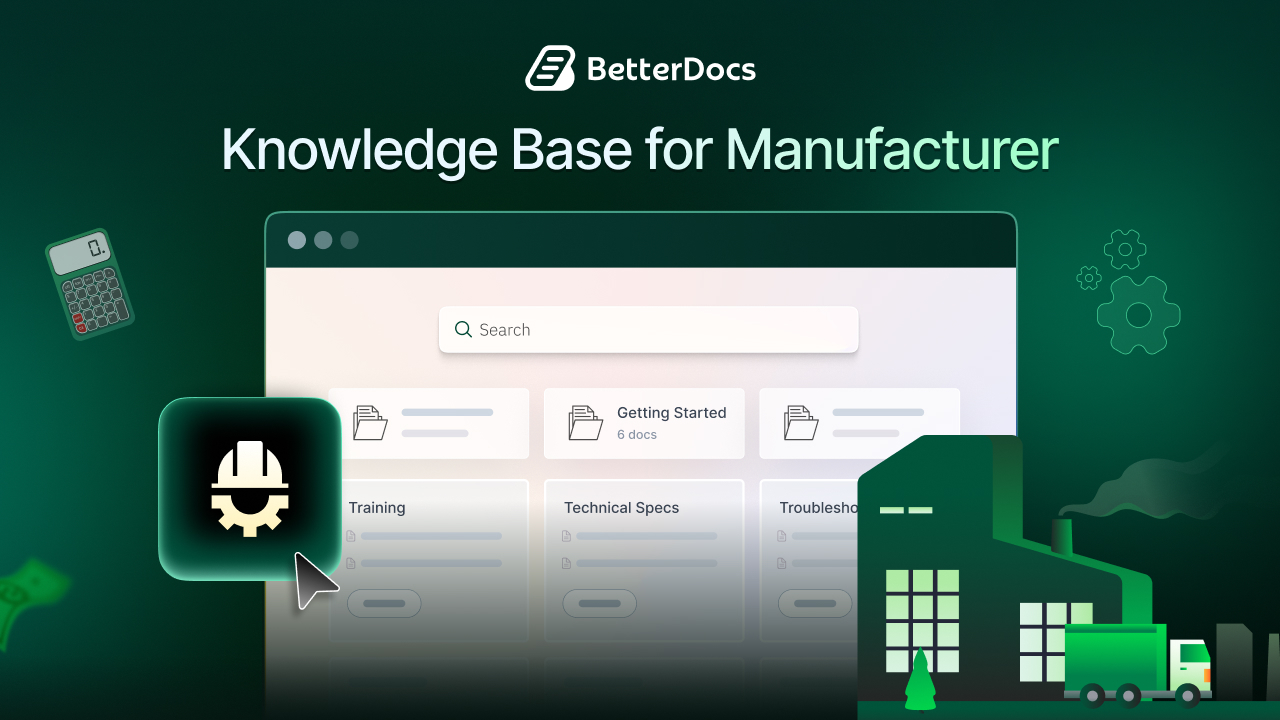
This is where an Internal Knowledge Base in manufacturing becomes valuable. A well-structured knowledge basehelps teams organize procedures, work instructions, troubleshooting guides, and internal policies in one searchable space on their website or internal portal. It improves access to information across production, maintenance, quality, training, and operations while making internal documentation easier to manage at scale. Let us dive deeper.
Key Use Cases of An Internal Knowledge Base in Manufacturing Industries
For the manufacturing industry, the value of a knowledge base is not only documentation storage. It is about making information usable at the moment employees need it. Whether it is a machine operator checking a setup process or a quality manager reviewing a compliance checklist, strong documentation for the manufacturing industry should be easy to search, update, and share.
1. Standard Operating Procedures for Production Teams
Production floors depend on repeatable execution. An internal knowledge base can create SOPs for machine setup, shift handover, assembly steps, packaging standards and shutdown routines. Instead of relying on printed binders or outdated files, employees can access the latest version from a centralized platform.
Example: A packaging unit adds a new labeling requirement for export products. Rather than circulating the update over email, the operations manager updates the knowledge base article. Every shift supervisor and operator can immediately access the revised SOP from the company website’s internal documentation portal.
2. Maintenance And Equipment Troubleshooting
Maintenance teams often need fast answers during breakdowns. An internal knowledge base can store preventive maintenance schedules, equipment manuals, troubleshooting steps, spare-part references and escalation instructions. This reduces time wasted searching through folders or waiting for a senior technician.
Example: A CNC machine starts showing a recurring alarm code during the night shift. Instead of waiting until morning, the technician searches the internal knowledge base, finds the documented fix, checks the recommended inspection steps, and restores production faster.
3. Quality Assurance And Compliance Documentation
Quality and compliance teams handle many documents, such as inspection checklists, calibration procedures, audit trails, CAPA workflows and regulatory instructions. Storing these materials in an internal knowledge base makes it easier to standardize and control them, particularly across different plants or departments.

Example: During an internal audit, the QA team needs immediate access to the latest defect classification guide and corrective action process. Because these documents are already organized in the knowledge base, the team can retrieve the correct version instantly and avoid confusion caused by duplicate files.
4. Faster Training And Onboarding for New Employees
Training new operators, engineers and supervisors takes time. This is especially true in settings with specialized equipment or safety-critical tasks. Internal documentation can become a structured learning center that includes beginner guides, role-based documents, FAQs, and process walkthroughs.
Example: A new production supervisor joins a food manufacturing company. Instead of depending only on shadowing senior staff, the supervisor gets access to a knowledge base with plant terminology, daily reporting procedures, sanitation rules, and common issue-response guides. This shortens the learning curve and improves confidence from the start.
5. Cross-Department Knowledge Sharing
Manufacturing performance relies on cooperation between production, engineering, procurement, maintenance and quality. An internal knowledge base provides a single source of truth where each department can record and share insights. This makes it easier to avoid working separately and ensures everyone works from the same information.
Example: Engineering updates a change in machine settings to improve output quality. By documenting the change in the internal knowledge base, the production and quality teams can immediately review the revised parameters, expected results, and monitoring instructions without waiting for separate meetings.
How BetterDocs Can Help to Create a Knowledge Base for Manufacturing Industry?
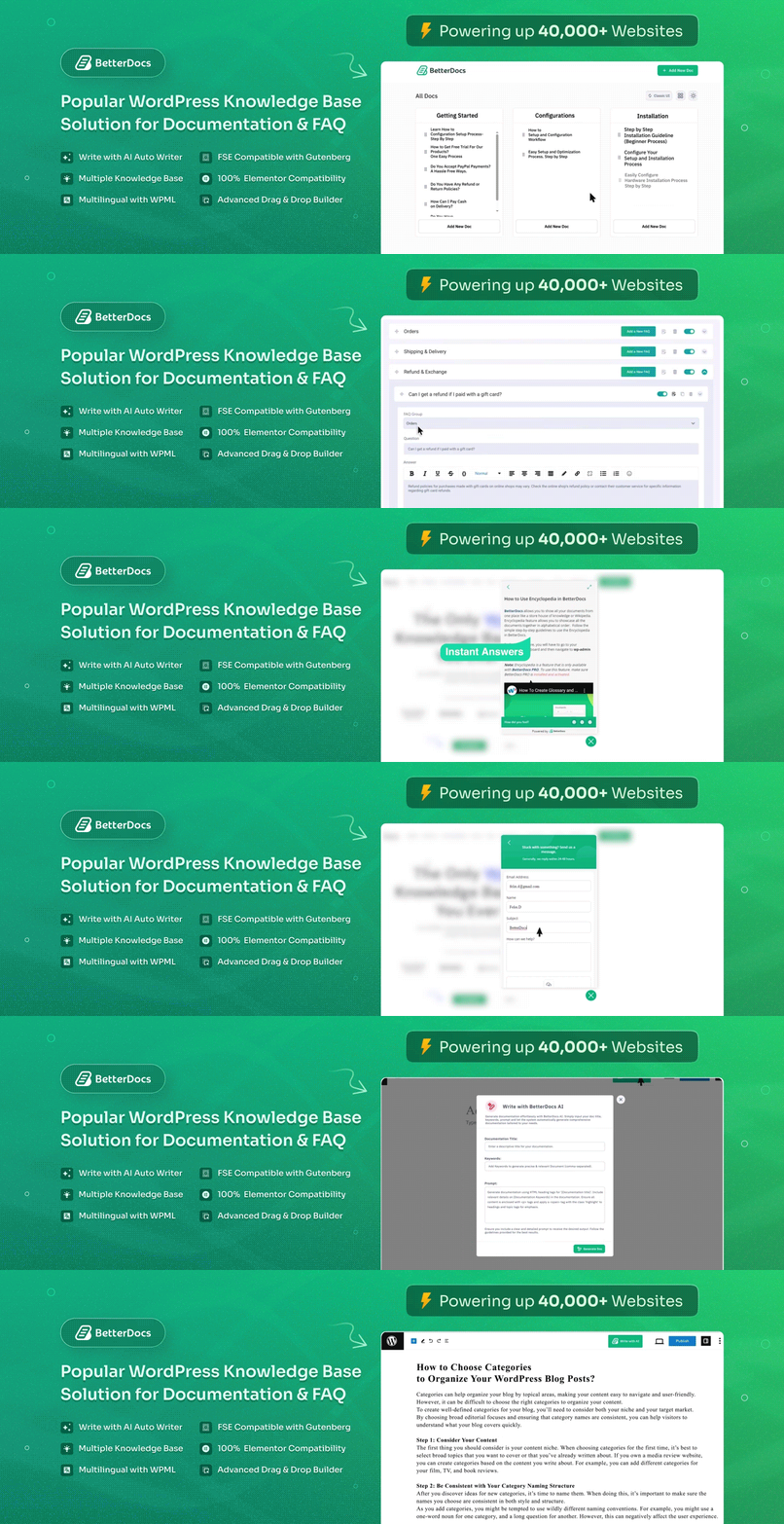
BetterDocs is an AI-powered documentation plugin for WordPress designed to help businesses build smart knowledge bases. Using features such as doc and FAQ builder, instant answers, multiple knowledge bases, advanced analytics, live search and AI-powered features, you can create knowledge bases with detailed documentation.
For manufacturers, this means you can build a centralized documentation hub for production teams, maintenance crews, plant managers, or even distributors using the same framework. Instead of creating a complex portal from scratch, you can organize content into categories, publish process documents faster, and improve discoverability through better search and structured layouts.
BetterDocs also supports multiple layout styles and customization options, helping companies present their documentation in a more organized and user-friendly way.
One particularly useful functionality is to create an internal knowledge base with advanced control. BetterDocs allows businesses to restrict access to specific documents, categories, or entire knowledge bases based on logged-in users or selected user roles. It also supports restricting access to doc archives and setting redirect URLs for unauthorized viewers. That makes it practical for manufacturers that need separate visibility for plant teams, management, technical staff, or regional units.
Manage Your Manufacturing Internal Knowledge Base Smartly with BetterDocs
An Internal Knowledge Base in the manufacturing industry is no longer just a nice-to-have. It is a practical system for reducing information gaps, improving consistency, and making internal expertise easier to scale. From SOP management to maintenance troubleshooting, quality compliance, onboarding, and cross-functional collaboration, the right knowledge base can make daily operations more efficient.
For companies in the manufacturing industry, investing in well-organized internal documentation means fewer delays, faster decisions, and stronger process reliability. And if you want to launch that system on WordPress, BetterDocs offers a solid starting point for building a searchable, structured and role-based knowledge base.
Was this blog helpful? Do not forget to subscribe to our blog. Also, join our Facebook Community to learn how different industries are using an internal knowledge base in BetterDocs.