Running an eCommerce business is fast-paced. Products change, policies update, new team members join and customers always need quick answers. Keeping everyone on the same page becomes one of the biggest operational challenges as your store grows.
That is exactly where an internal knowledge base comes in.
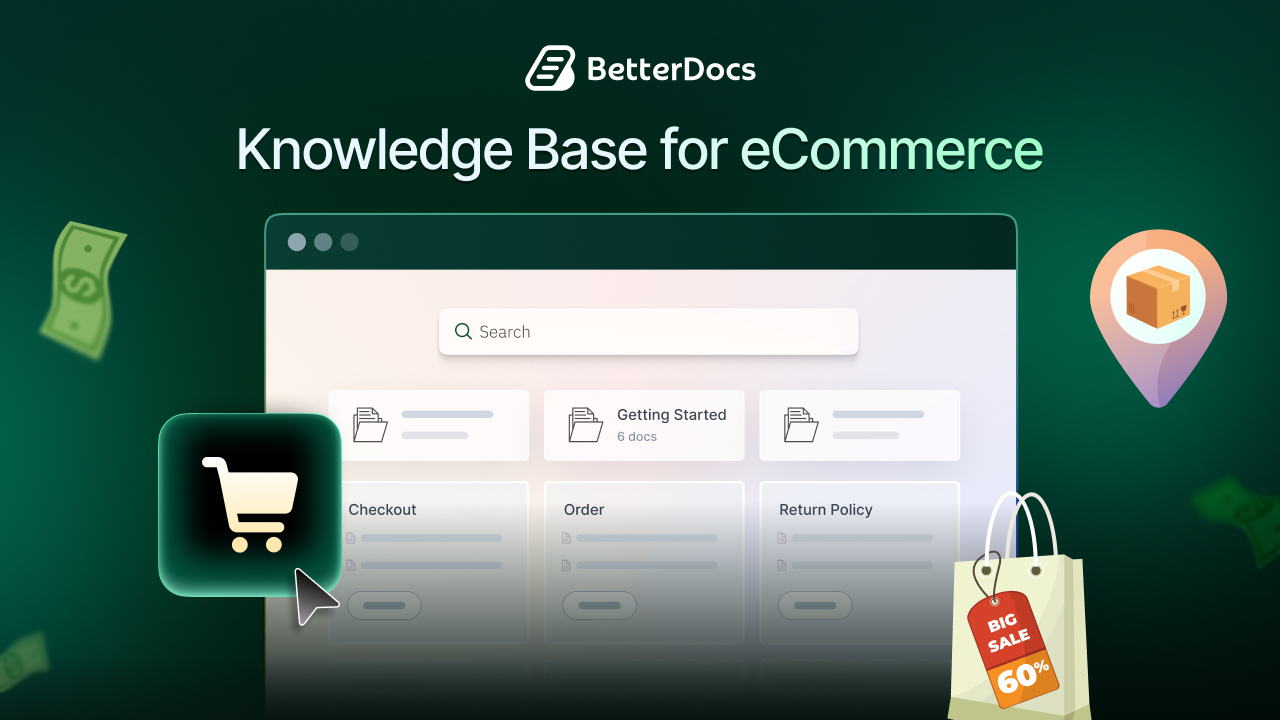
An internal knowledge base for eCommerce is a centralized hub where your team can access company information, product details, workflows, policies and more, anytime they need it. It is not visible to your customers. It is built for your people.
Tools like BetterDocs make it easy to set up a well-organized, role-based internal knowledge base for eCommerce websites without any technical complexity. But why does the eCommerce industry specifically need one? Let’s dig in.
Challenges That an Internal Knowledge Base for eCommerce Solves
eCommerce teams deal with high volume, constant change and cross-functional dependencies. Here are the pain points that an internal knowledge base directly addresses:
- Team members repeat the same questions to managers
- New hires take weeks to get up to speed
- Support agents give inconsistent answers to customers
- Product information gets scattered across emails and Slack messages
- Seasonal spikes overwhelm already stretched teams
Now, let us look at the real-world use cases where creating an internal knowledge base for eCommerce websites makes the biggest difference.
Use Case 1: Faster Employee Onboarding
Bringing a new hire into an eCommerce team is not a small task. They need to understand your product catalog, return policies, shipping rules, platform tools and communication workflows — all at once.
Without a knowledge base, onboarding relies heavily on a senior team member walking newcomers through everything. That takes time; time that could be spent on higher-value work.
With an internal knowledge base, new employees can self-serve. They can read through structured onboarding guides, watch embedded tutorials, and refer back to documents whenever they need a refresher. The result? Shorter onboarding time and more confident new hires.

Use Case 2: Empowering Your Customer Support Team
Your customer support team is on the front lines. They handle return requests, shipping delays, discount queries and product questions; all often in the same hour.
When your support agents do not have quick access to accurate information, they either guess or escalate. Both options slow things down and hurt the customer experience.
An eCommerce knowledge base gives support agents a single place to look up:
- Return and refund policies
- Shipping timelines and carrier information
- Common troubleshooting steps
- Escalation procedures
The faster your team finds the right answer, the faster your customers get help. That directly impacts customer satisfaction and repeat purchases.
Use Case 3: Centralizing Product Information
In eCommerce, product information is constantly evolving. New SKUs get added, descriptions are updated, pricing changes with promotions and stock availability fluctuates.
When product information lives across spreadsheets, emails and chat messages, it becomes almost impossible to maintain accuracy across teams. Your marketing team might promote a product that is out of stock. Your support team might quote the wrong price.
An internal knowledge base keeps product information organized and up-to-date. Whether it is a catalog guide, a pricing sheet, or supplier details, your whole team accesses the same version of the truth. No more confusion. No more conflicting information.
Use Case 4: Standardizing Workflows Across Departments
Every eCommerce business has internal processes like how to handle a chargeback, how to process a bulk order, how to update product listings, or how to escalate a vendor issue.
Without documentation, these processes exist only in the heads of the people who have been around long enough to know them. That is a fragile system. One resignation and critical knowledge walk out the door.
With an internal knowledge base, you can document workflows step by step. Teams across operations, marketing, logistics, and support follow the same process. This consistency reduces errors, improves coordination, and makes audits significantly easier.
Use Case 5: Managing Seasonal Peaks With Confidence
Black Friday. Cyber Monday. Holiday season. Flash sales.
These high-traffic periods put massive pressure on eCommerce teams. New temporary staff come on board. Everyone needs to know the rules fast.
An internal knowledge base becomes especially valuable during these surges. Seasonal policies, promotional guidelines, and updated shipping deadlines can be published in one place and accessed by your entire team instantly. No need for lengthy briefings or repeated email threads. So, when the rush hits, your team is already ready.
Use Case 6: Role-Based Access for Sensitive Information
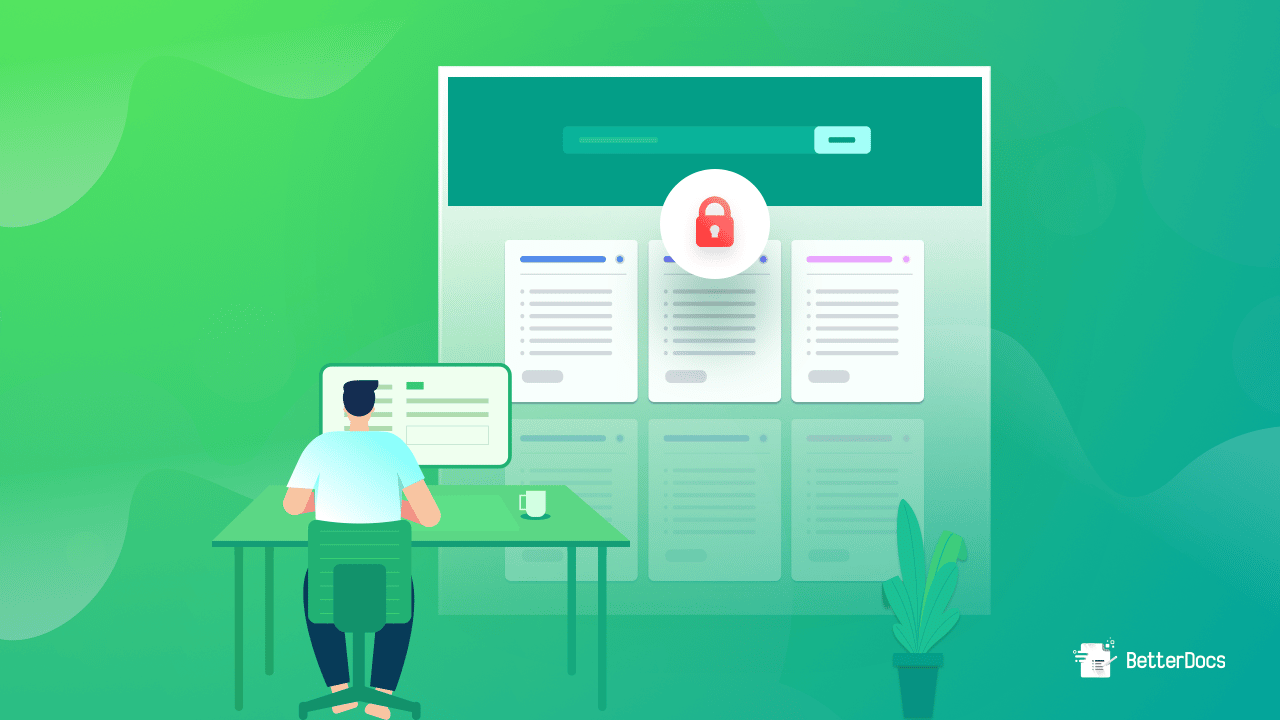
Not every team member needs access to every document. Pricing strategies, supplier contracts and financial data should only be visible to the right people.
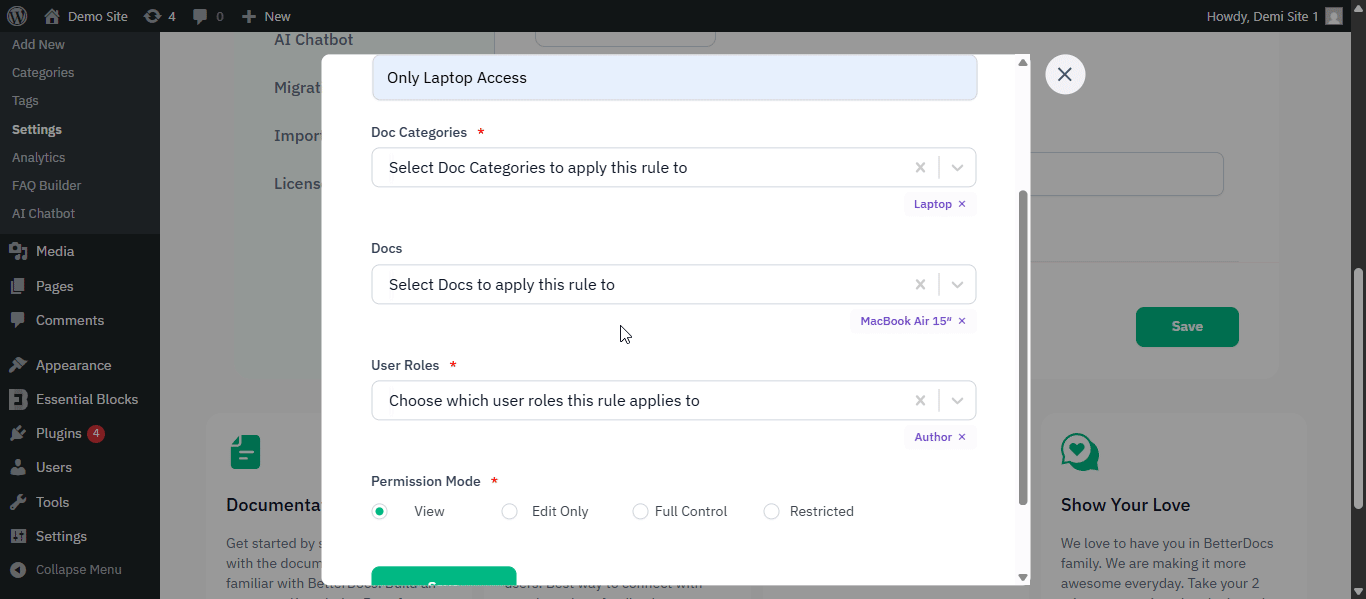
BetterDocs supports role-based access control, which means you can control exactly who sees what inside your internal knowledge base. Your warehouse team sees operational guides. Your management team accesses strategic documents. Sensitive information stays protected while everyone still gets what they need.
How BetterDocs Is Built for eCommerce Knowledge Base?
BetterDocs is a powerful knowledge base plugin that makes building and managing internal documentation straightforward. With an intuitive interface, easy content organization, and role-based access, it fits naturally into the eCommerce workflow.
Whether you are running a growing Shopify store, a WooCommerce-powered marketplace, or a large-scale eCommerce operation, BetterDocs helps you create a knowledge system your team will actually use.
Build a Smarter Team for Your eCommerce Business With the Right Information
An internal knowledge base is not just a nice-to-have for eCommerce businesses; it is a competitive advantage. It reduces dependency on individuals, speeds up onboarding, improves customer support and keeps your operations consistent as you scale.
If your team is still relying on scattered documents and repeated conversations to get work done, it’s time to centralize. Start building your internal knowledge base with BetterDocs and give your team the information they need, right when they need it.
Hopefully, this article has helped you better understand how eCommerce businesses can use an internal knowledge base. If you want to get updates on more blogs like this, then subscribe to us. Also, do not forget to join our Facebook Community.